



Ensuring International Project Execution: Pakistan's Dasu Project Strengthens Construction Management with a Dual Focus on Strategy and Optimization
source:
Page view:
Time:2026-04-24
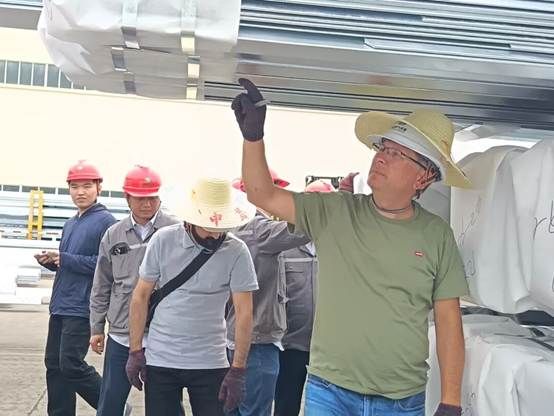
The Dasu transmission line spans a total length of 98 kilometers, traversing the Punjab and Khyber Pakhtunkhwa provinces of Pakistan. Due to geopolitical and security considerations, the Chinese team is unable to be physically present on-site to carry out civil construction and related works, presenting severe challenges to project construction schedule management. In response to this situation, from the very outset of the project, the Dasu team formulated a localization strategy. They assembled an experienced team of Pakistani employees and established a dual-wing operational framework consisting of an “Islamabad Command Center + Project Site Engineering Department.” The Chinese team, based at the command center, oversees the overall direction and resource coordination for the project, while the Pakistani team, stationed at the project site, organizes day-to-day construction activities and monitors progress. Through mechanisms such as daily meetings, weekly meetings, quality and safety meetings, site inspections, and specialized reporting, information is transmitted in a timely manner, enabling seamless coordination and organic synergy between the two teams.
The Dasu project involves the design of 276 tower locations along its entire route. Constrained by factors such as topography, terrain, and soil conditions, the optimization of line design and construction plans directly determines the project's contract performance schedule. The project team has actively integrated technical expertise from all parties involved to tackle challenges one by one, thereby creating favorable conditions for ensuring contract fulfillment and timely delivery. For example, tower locations in the T1-T70 section are situated in mountainous terrain, with approximately 15 sites featuring steep gradients and discontinuous layouts. Due to limitations imposed by tower structure height and leg extension design, conventional methods of slope cutting and base lowering could not be applied. A large-scale rerouting adjustment would have directly impacted over 30 tower locations, significantly disrupting the construction rhythm and increasing costs. Through collaborative efforts involving the design institute, geotechnical survey company, and manufacturer subcontractors, the project team innovatively optimized the original foundation construction plan by switching to a dry pile foundation method. This solution effectively resolved the foundational construction challenges while maintaining the original tower configuration, successfully averting the losses associated with rerouting and establishing a solid groundwork for subsequent tower assembly and installation.