



Ensuring International Project Execution: Pakistan’s Dasu Project Strengthens Domestic Quality Control as Testing and Acceptance Accelerate
source:
Page view:
Time:2026-04-24
The Dasu project is Pakistan’s first 765kV transmission and transformation line project. Its technical specifications, the profile of the supervising authorities, and the project’s significant strategic importance collectively constitute a rigorous test of Harbin Electric International’s (HEI) project execution and contract fulfillment capabilities. Confronted with these challenges, the Dasu project team has adhered to the mandate of “ensuring contract performance for international projects,” implementing lean management practices across quality control, team structuring, and commercial risk mitigation to substantively elevate the level of performance management.
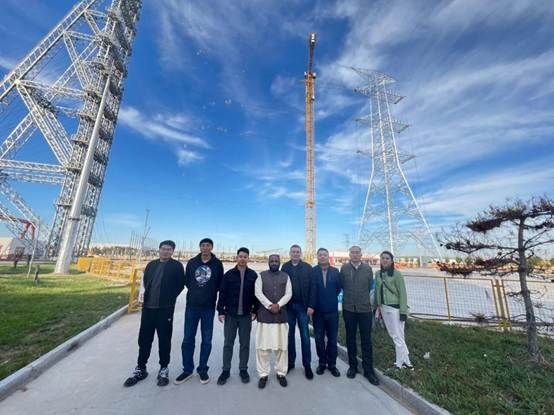
The main contract for the Dasu project stipulates that key equipment and materials (such as transmission towers, conductors, hardware fittings, and insulators) must undergo type testing, and production may only commence after these tests are successfully passed. Furthermore, all equipment and materials are subject to factory acceptance tests, and shipment is only permitted following successful acceptance. Both type tests and factory acceptance tests must be conducted in accordance with international standards, with the entire process witnessed and supervised by the client's consultant. Given these stipulations, the quality of testing for the Dasu project is of paramount importance, as it will directly impact the project's delivery schedule and construction progress. Consequently, how to organize and ensure the smooth and successful completion of these tests constitutes a critical task in safeguarding the Dasu project's contract performance.
In terms of type testing, the project team integrated resources from all parties to advance the process meticulously and efficiently. First, leveraging the advantageous resources of suppliers was a priority. For example, the project’s conductor manufacturer possessed a strong track record of successful supply to numerous engineering projects in Pakistan. By meticulously reviewing the manufacturer's existing type test data, the team determined that it sufficiently met the specific testing requirements of the Dasu project. Ultimately, they secured the client’s approval for a waiver of type testing, enabling the conductor materials to swiftly enter the production phase. Second, meticulous organization of test arrangements was carried out. During the transmission tower load testing phase, the Dasu team collaborated closely with the testing station, equipment manufacturers, design institutes, and other entities, while maintaining efficient communication with the client and the consultant. By continuously refining the testing plan and schedule, they ultimately achieved the successful first-attempt passing of load tests for all three tower types. Finally, in-depth optimization of test protocols to mitigate potential risks was undertaken. Taking hardware fittings as an example: the main contract stipulated that testing must be conducted at a laboratory within the European STL (Short-circuit Testing Liaison) Alliance. This requirement posed adverse challenges such as low communication efficiency, significant delays in testing slot availability, and difficulty in controlling the test schedule. Confronted with this situation, the project team organized the manufacturer to devise an alternative plan utilizing domestic facilities. This shortened the testing cycle by at least six months, thereby avoiding potential schedule losses caused by testing backlogs.
In terms of factory acceptance, rectification and improvement showed significant results, and experience sharing led to outstanding achievements. The project team promptly summarized issues exposed during earlier acceptance phases and formulated targeted rectification and improvement measures. When the first batch of transmission tower materials exhibited galvanizing defects such as missed spots and peeling during acceptance inspection, the project team immediately developed a quality rectification and improvement plan. Collaborating with the Quality and Safety Department, they conducted quality awareness training and galvanizing standard interpretation sessions for the responsible manufacturer, organized a galvanizing process review to formulate specific corrective actions, supervised the manufacturer in establishing robust quality management mechanisms and increasing manpower allocation, and implemented random spot checks along with simulated acceptance procedures. Thanks to these multi-pronged measures, the second batch of tower materials (approximately 170,000 pieces) for the Dasu project passed factory acceptance on the first attempt. Consequently, the acceptance cycle was dramatically shortened from 55 days to just 7 days, saving all parties over RMB 1 million in potential rework costs and significantly enhancing the client's confidence in the quality of Chinese products and management capabilities. Building on this success, the project team extended the lessons learned to prevent recurrence elsewhere. Regarding hardware fittings, which also involve galvanizing processes, manufacturers were preemptively warned to avoid similar quality issues. For equipment and materials requiring large-volume acceptance inspection, such as insulators and conductors, the team shared insights drawn from the galvanizing process improvements to ensure the smooth and successful completion of all factory acceptance tests.