


Central SOE Commitment | Joint Construction and Shared Benefits, Sailing Towards Dreams: The Syrdarya II Project in Uzbekistan Supports the Sustainable Development of the BRI
source:
Page view:
Time:2026-02-09
As a key hub of the ancient Silk Road, Uzbekistan bears witness to the profound friendship between China and Uzbekistan through over a millennium of interactions, while also carving out firm strides in the joint construction of the Belt and Road Initiative in the new era. On this vibrant land, the Syrdarya II project in Uzbekistan, undertaken by Harbin Electric International Company Limited (HEI), wields the pen of central SOEs’ responsibility and the ink of shared development. It paints a blueprint of green energy onto the canvas of Central Asia, injecting strong momentum into local economic and social development and writing a remarkable chapter in supporting the sustainable advancement of the Belt and Road Initiative.
The Syrdarya II project is a key construction project of Harbin Electric Corporation and is currently the largest combined-cycle power plant project under construction in Central Asia. During project execution, the project department has not only prioritized construction quality, efficiency, and cost-effectiveness but has also remained committed to fulfilling corporate social responsibilities. By focusing on safety and health, environmental protection, community development, employee welfare, and cultural respect, the project actively drives sustainable development.
Promoting Local Economic Development
Providing employment opportunities. During the construction of the Syrdarya II project, the project department places special emphasis on employing local labor, ensuring that the proportion of local employees is no less than 50% of the total workforce. The project department has hired a large number of local employees by organizing recruitment fairs in the community and collaborating with local labor agencies. This is particularly evident in areas such as ESHS, civil construction, equipment installation, and logistical support, creating nearly 1,000 direct and indirect job opportunities. The project department also provides training for local employees to help them acquire modern technical and management knowledge. These positions not only provide local employees with stable incomes but also enhance their skills and work experience, laying the foundation for their future employment prospects. Furthermore, these measures have also provided human resource support for Uzbekistan’s long-term economic development, contributing to local social progress and economic growth.
Promoting industrial development. In addition to providing direct employment opportunities, the Syrdarya II project department has also fostered the development of the local industrial chain through cooperation with local suppliers. The project extensively uses locally sourced materials, having already procured tens of thousands of tons of materials such as cement, sand, gravel, and steel bars from the local market during the construction process. The project department actively coordinated with local enterprises to ensure the timely and adequate supply of these materials. Through this series of collaborations, local industries related to building materials, transportation, and machinery leasing have been developed, thereby stimulating the growth of surrounding sectors.
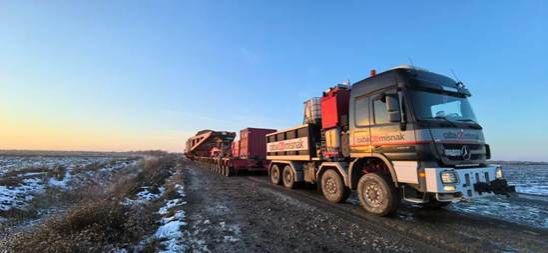
A local transportation company in Uzbekistan assists with the transport of project equipment
Increasing tax contributions. During the construction of the Syrdarya II project, it has generated substantial tax revenue for the local government. These taxes can be utilized to support local infrastructure development, education, healthcare, social welfare, and other public services. In addition to supporting the local economy through tax contributions, the project department actively cooperates with government departments and strictly complies with local laws and regulations to ensure lawful and compliant operations, thereby guaranteeing smooth project progress.
Advancing Environmental Protection and Sustainable Development of Biological and Natural Resources
Implementing green emission reduction. During the design and procurement stages, the Syrdarya II project adopts multiple high-efficiency air emission reduction technologies, including low-NOx combustion chambers for gas turbines and SCR denitrification for waste heat boilers, ensuring that NOx emissions during operation meet the 30 mg/Nm3 standard. Industrial wastewater, as well as production and domestic sewage generated within the plant, will be treated by a series of procured equipment to comply with the World Bank’s stringent discharge standards. Multiple environmental protection measures have been implemented during construction to mitigate environmental impacts: all mechanical and electrical equipment underwent document review and operational condition inspections to ensure no excessive emissions; air and noise monitoring equipment was procured to regularly test the site and surrounding sensitive community areas; collaboration with third-party laboratory institutions ensured periodic testing of water quality upstream and downstream of the water intake points, as well as groundwater quality, alongside species monitoring in the canal water intake and discharge areas; two sewage purification units were installed in the living quarters, with treated and tested discharges meeting government standards to ensure compliance.
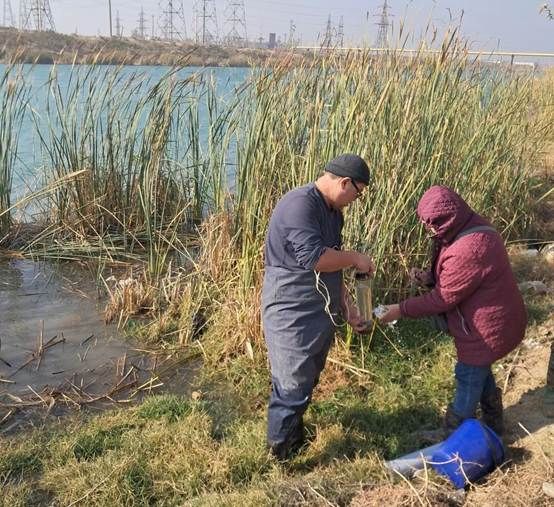
The project department invited local institutions to conduct species monitoring in the project’s water intake and discharge canal areas
Promoting ecological protection. To reduce the environmental impact of construction, the Syrdarya II project department places high importance on ecological restoration efforts. During construction, the work areas are strictly controlled to avoid damaging the surrounding vegetation and the ecological environment. The project department collaborates with the local environmental protection bureau to conduct bird surveys and continuously monitor species in the water intake construction area and surrounding waters throughout the construction period. Upon project completion, a substantial number of trees and shrubs will be planted to restore the affected land and gradually reestablish ecological balance.
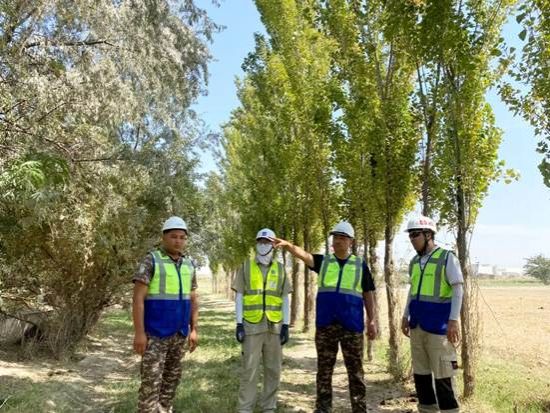
The project department and the local environmental protection bureau jointly carry out on-site bird surveys
Strengthening environmental protection measures. The Syrdarya II project department has appointed dedicated environmental management personnel and formulated seven environmental management procedures covering greenhouse gases, waste, noise, air, soil, groundwater, and chemical spill response. A non-hazardous waste sorting and storage station has been established at the project site, and due diligence has been conducted on waste treatment companies. For waste materials such as timber and aggregates, priority is given to recycling, reuse, or donation to surrounding communities. Specialized storage areas have been designated for chemicals and hazardous waste, equipped with leak-proof measures and emergency response facilities. The project has also contracted qualified professional companies for hazardous waste disposal. Additionally, the project department continuously conducts environmental protection training for employees to raise awareness and enhance emergency response capabilities.
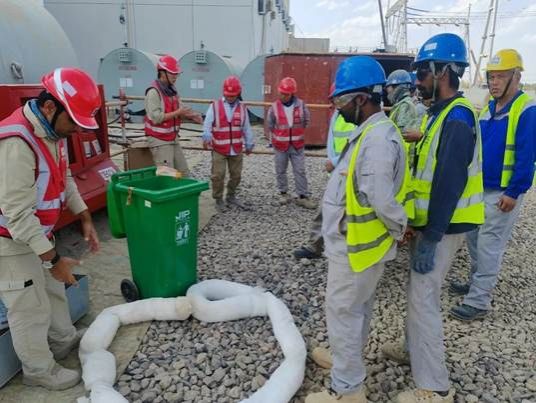
On-site training for chemical spill response at the project site
Cultural Respect and Social Engagement
Establishing communication mechanisms. Throughout the project implementation process, the Syrdarya II project department has made efforts to understand local customs, religious beliefs, and other cultural aspects to ensure harmonious relationships with the local community and residents during project construction. During local festivals, the project department proactively respects local customs and reasonably adjusts work schedules. A community liaison officer has been appointed to communicate with local communities and government authorities, working in coordination with the project’s complaint mechanism to ensure that any feedback or issues are promptly communicated to the project department and followed up for resolution. The project department also holds regular meetings to update local communities and government representatives on construction progress and plans, while actively receiving suggestions and feedback from the community and government.
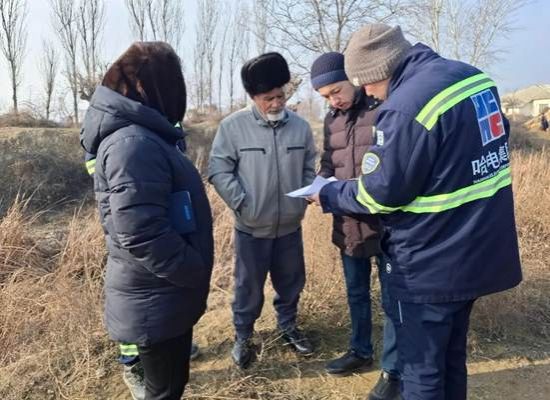
Project department representatives communicate with community residents
Carrying out public welfare assistance. The Syrdarya II project department actively participates in local public welfare initiatives. On Children’s Day in 2025, project staff distributed ice cream to local children to celebrate the occasion. Before the start of the new school semester, the project department donated school uniforms to elementary school students in the area. During Uzbekistan’s National Day celebrations in 2025, the project department visited 20 impoverished local households and provided them with vegetables. In the winter of 2025, the project department organized a care activity for 100 elderly, infirm, sick, and disabled residents in the local community. Throughout 2025, a total of 2,990 m³ of waste timber was provided to surrounding communities for house repairs or as firewood. These initiatives not only helped establish a positive corporate image for HEI in the local area but also strengthened relationships with local governments and residents.
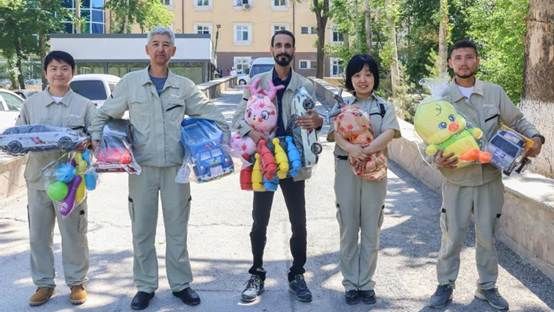
The project department visits children with illnesses
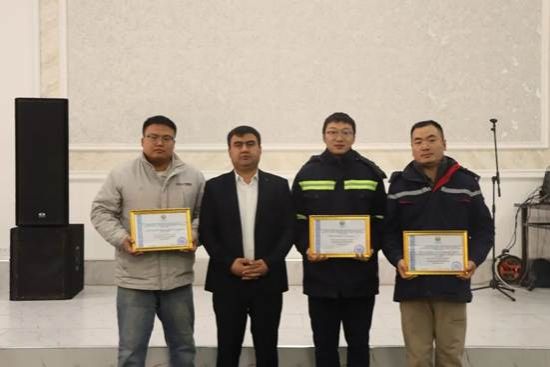
The project department received a certificate of appreciation from the local municipal government for caring for the elderly, infirm, sick, and disabled in the community
Safety Management and Employee Welfare
Improving safety mechanisms. Employee safety has always been the top priority of the Syrdarya II project department. In accordance with the laws of Uzbekistan and international standards, the project department has formulated and implemented 63 ESHS management systems, developed safety courses in four languages based on employees’ nationalities, equipped VR experience devices, and organized more than 6,000 centralized training sessions in 2025. The project site is staffed with over 40 dedicated safety officers and equipped with a “Smart Construction Site” system to monitor construction safety in real time, ensuring zero major safety incidents. Additionally, a first aid station has been set up on-site, with ambulance doctors and fire truck firefighters on 24-hour duty to ensure prompt response to emergencies. In 2025, the project conducted 11 emergency drills of various types, involving 1,667 participants, significantly improving employees’ self-rescue, mutual aid, and initial emergency response capabilities. Furthermore, the project department regularly organizes safety-related cultural activities, such as the monthly Safety Star award, to strengthen humanistic care, encourage employee participation in safety management, and enhance safety awareness.
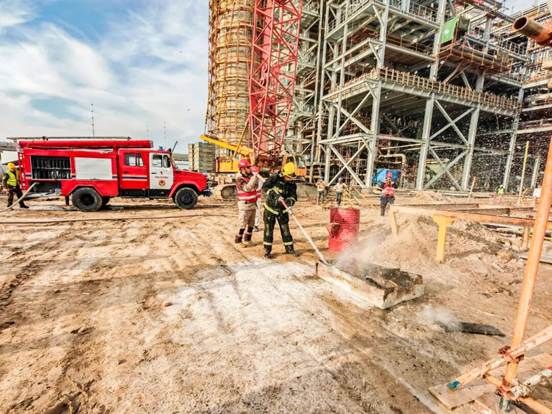
Fire emergency drill at the project site
Enhancing employee welfare. The Syrdarya II project department also places special emphasis on employee welfare benefits. The department purchases insurance for employees and provides accommodation with good sanitary conditions. The dormitory area is equipped with sports and recreational facilities, and rest lounges with refrigerators, air conditioning, and hot water are available at the workplace, ensuring that employees can work and live in a comfortable environment. Additionally, the project department adopts a mentorship approach to nurture employees and offers professional training to help them improve their personal capabilities and professional skills.
Guided by a sense of responsibility and propelled by cooperation, the Syrdarya II project undertaken by HEI in Uzbekistan has written a vivid chapter of a central SOE’s contribution to the Belt and Road Initiative on the land of Central Asia. From technological empowerment for green transformation to sharing the fruits of development for the well-being of local communities, from cross-cultural integration and mutual trust to deep cultivation of sustainable development, the project has not only built a solid bridge for energy cooperation but also forged deep friendship between the peoples of China and Uzbekistan. Standing at a new starting point for development, HEI will continue to uphold the original aspiration of joint construction and shared benefits. With firmer commitment and more pragmatic actions, the company will deepen its presence in overseas markets, address people’s livelihood needs, and advance green development, enabling the strength of central SOEs to continuously inject momentum into the high-quality development of the Belt and Road Initiative. Together with partner countries, HEI will forge a new chapter of mutual benefit, win-win cooperation, and shared dreams for the future.