



Faculty & Students from Harbin Institute of Technology Visit HEI on Corporate Open Day
source:
Page view:
Time:2026-11-06
Recently, more than 50 faculty members and students from Harbin Institute of Technology (HIT) visited HEI for a study tour. The two sides held in-depth discussions on corporate development, Party building, corporate culture, and talent development. The exchange strengthened communication and mutual understanding between the university and the company, and helped bring theoretical teaching and corporate practice into closer alignment.

During the visit, HIT faculty and students toured HEI’s smart exhibition hall, where they learned about the company’s development history, overseas market layout, core business areas, and achievements in international operations. They also saw firsthand the company’s achievements in energy infrastructure construction and international engineering contracting, gaining a better understanding of how Chinese enterprises actively participate in the Belt and Road Initiative and promote the global reach of Chinese technologies and equipment.
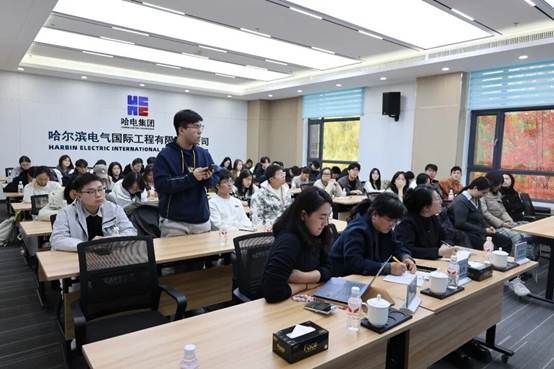
In the discussion that followed, HEI shared its practices and explorations in advancing international operations, strengthening primary-level Party building and training professionals for international work. This helped HIT faculty and students better understand how state-owned enterprises integrate Party building with business operations, as well as the competencies and qualities required of versatile talents in internationally operating companies. Combining ideological and political education at universities with the realities of corporate development, the two sides exchanged views on integrating theoretical learning and practical training. The discussion further deepened HIT faculty and students’ understanding of the reform, development, and international operations of state-owned enterprises.

This study tour has built a platform for exchanges and mutual progress between the university and the enterprise. It showcases HEI’s achievements in international development and its corporate culture, and provides firsthand examples for faculty and students from higher education institutions to learn about how state-owned enterprises operate. Looking ahead, the two sides will further strengthen communication, actively explore cooperation models in practical teaching and talent development, promote the sharing of resources and mutual complementation, and foster favorable conditions for collaborative talent training between the university and the company.